Ireland's AI Play
Keynote at PorterShed Spark, April 23 2026, Dexcom Stadium, Galway. I spoke about how the universal agent is reshaping work and companies, and what Ireland can do to be a beneficiary of this disruption, not a victim of it.
Last Monday I gave a guest lecture to masters Computer Engineering students at a top Irish university.
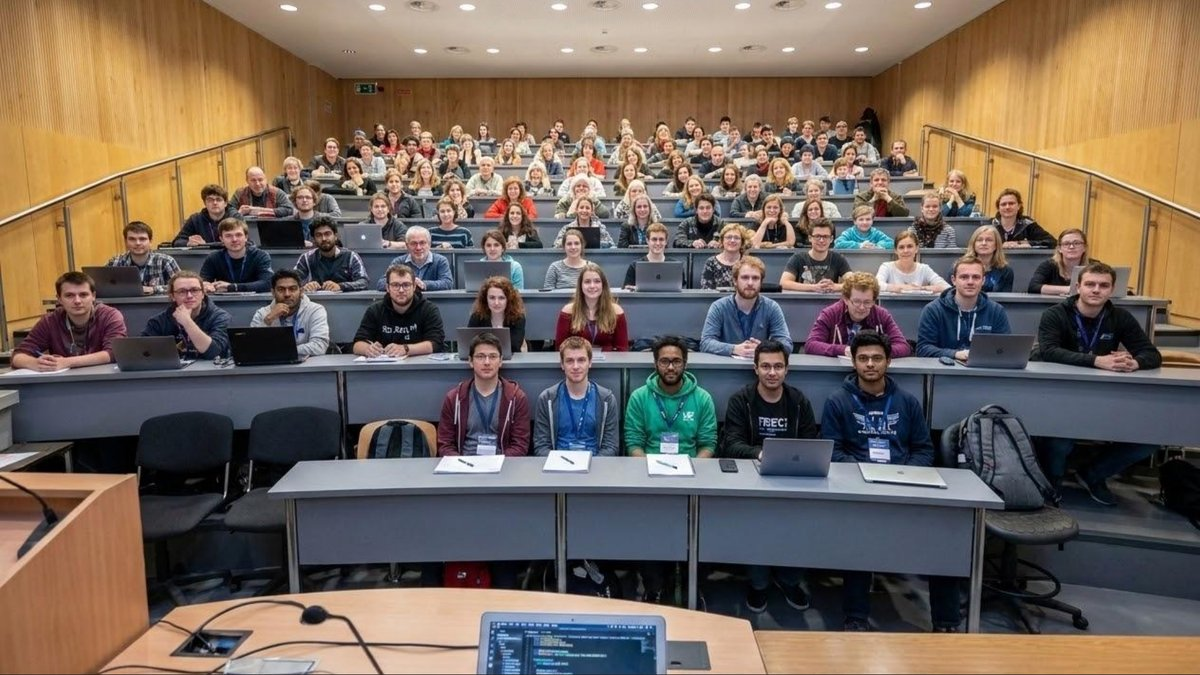
These are elite students, doing everything right. And they cannot get job interviews. That hasn’t happened since the dot-com bust.
I was in their shoes back then. Twenty-five years ago, three of us were finishing our degrees and the market had closed. So we started a company instead. That company became Phorest, now a global leader in salon management software. I went on to co-found Demonware, which built the multiplayer backbone for Call of Duty and Guitar Hero, sold to Activision in 2007. Then PageFair, acquired in 2018. And now Jentic.
At Jentic, we connect AI to enterprise applications, APIs, and data, safely. That last word is where all the difficulty lives. We work with global enterprises that have board-level mandates to allow AI agents to access their systems, and they need tight governance around that access. That work gives us an informed view of how agents are rolling out in real life.
So what is actually happening? The first thing that changes is software development itself.
What Is Actually Happening

Software engineering is the canary in the coal mine. The industry that builds automation tools automated itself first.
Powerful coding agents arrived before anywhere else: Devin, Windsurf, Cursor, then Claude Code. Any AI-native company today will tell you the same thing: they do not have humans writing code. They have humans managing the machines that write the code. The productivity gains are enormous, if you do it right. Software engineering was intensive knowledge work, requiring deeply educated and experienced professionals. What is possible there is possible across all knowledge work. Software is proof the labour impact is real, not theoretical.
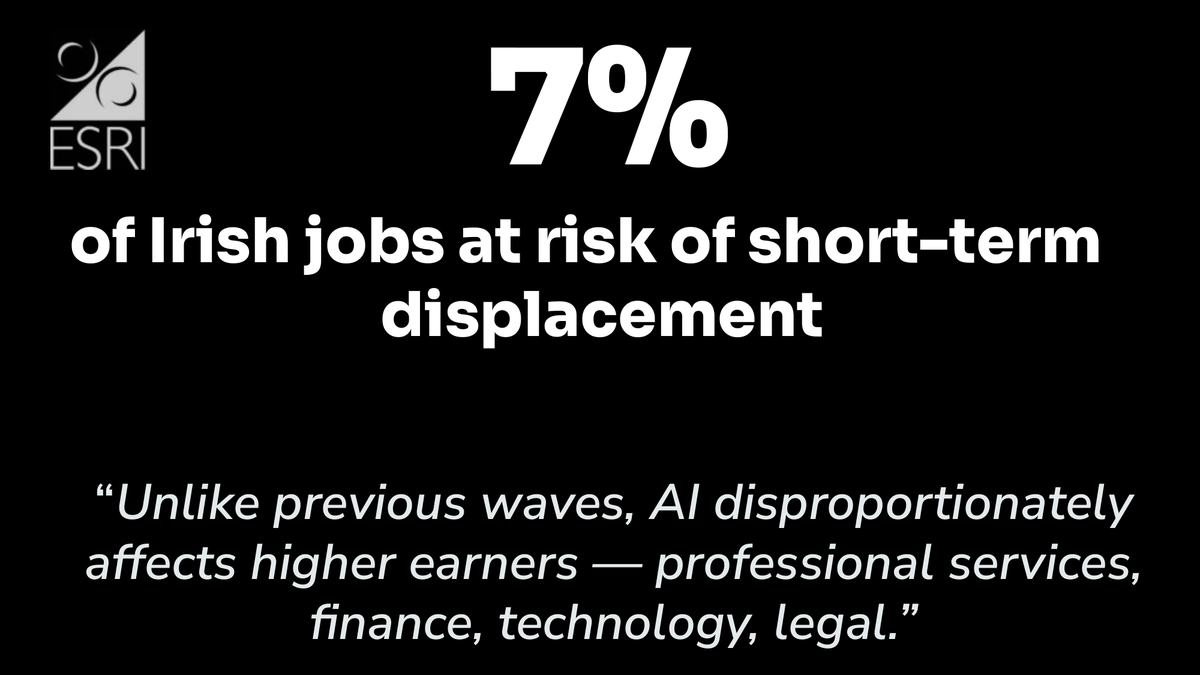
Two weeks ago, ESRI published a forecast on the impact on the Irish jobs market. Unlike every previous wave of automation, which hit lower-wage manual workers, AI disproportionately hits higher earners. Professional services, finance, technology, legal. People like you and me.
And unlike previous automation waves, you can’t outrun this one by upskilling. AI is improving too fast.
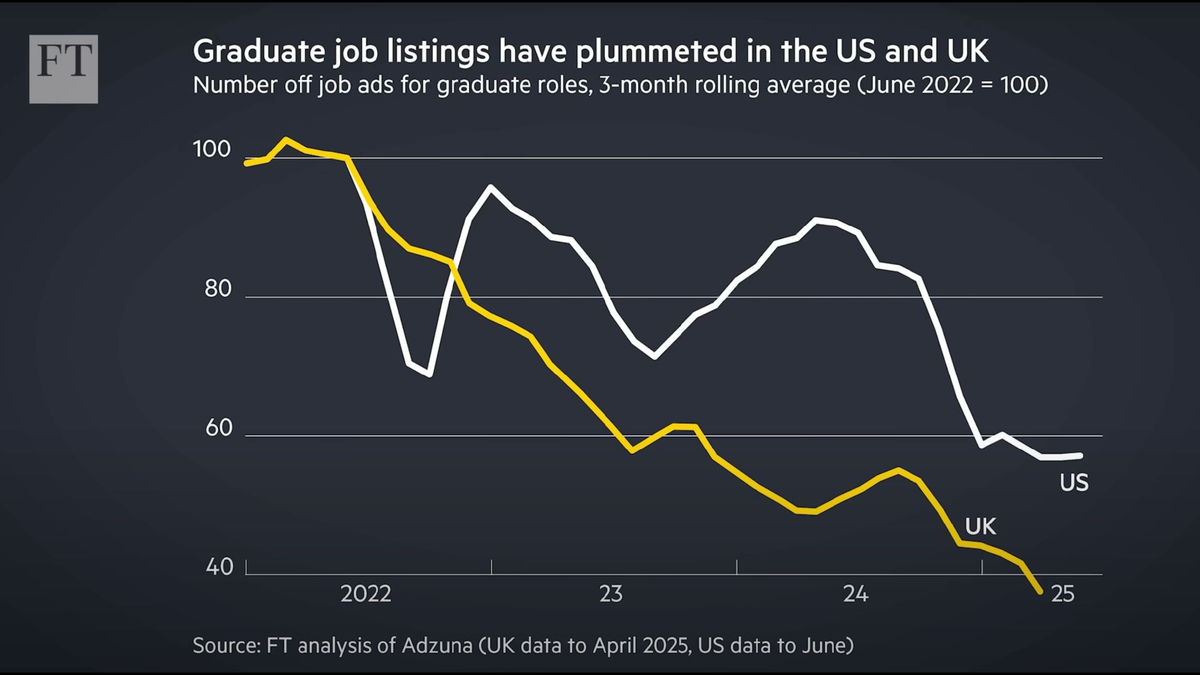
A healthy employment rate can mask a lot.
What happens next isn’t mass unemployment, but something subtler. Entry-level positions disappear, graduates migrate, wages get depressed, quality of employment declines. We must be careful not to celebrate our high employment rate while this happens.
The disruption so far has been from general-purpose AI combined with narrow-purpose agents. But now the universal agent has arrived.
The Universal Agent
That term was actually coined by Sundar Pichai, Google’s CEO, at Google I/O in May 2024. He called it Project Astra: a general-purpose AI agent, always available, that could help you with anything. Apple showed a similar vision for Siri at the same time. Neither company shipped what they demonstrated.
The reason wasn’t that the technology was too hard. It’s that unleashing a general-purpose AI agent on people’s personal data, communications, and apps was an intolerably high risk for corporations with shareholders and brands to protect. In the end, only open source could launch something so reckless.
In January 2026, that happened in the form of OpenClaw. A general-purpose, always-on, proactive agent that runs while you sleep, responds to events, and improves itself over time.
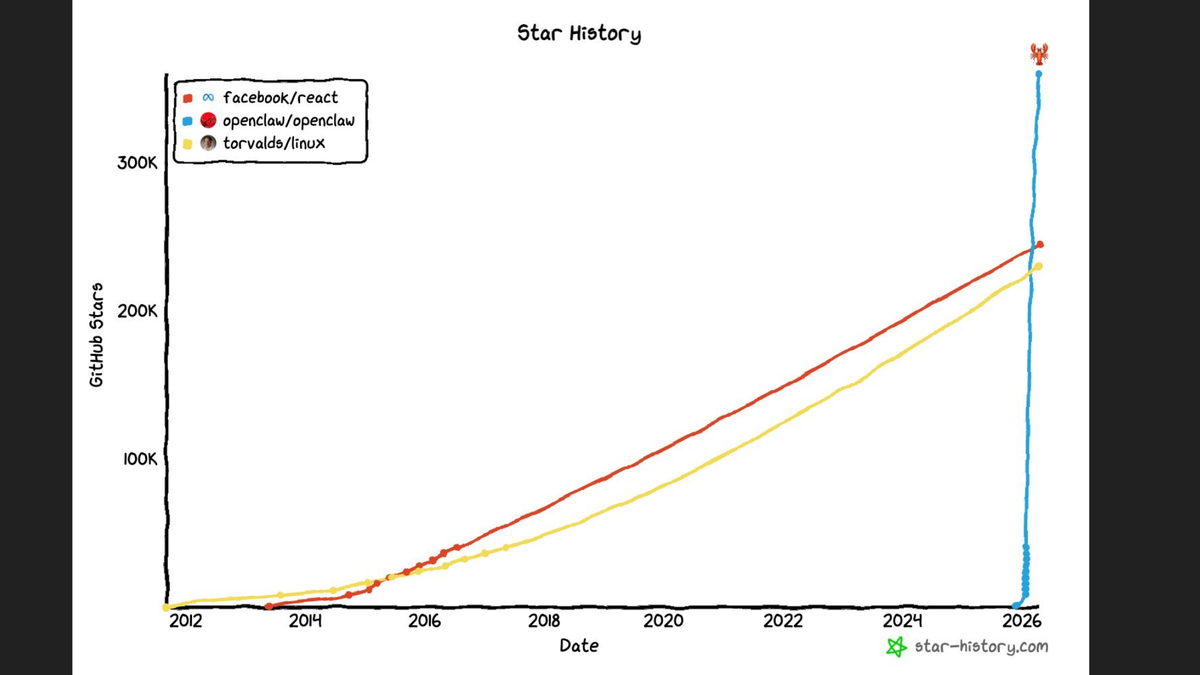
React, the leading web framework, took thirteen years to reach a quarter million GitHub stars. Similar with Linux. OpenClaw soared past that record in six weeks. It is now the most-starred software project in the history of GitHub.
Google and Apple have no choice now. They must ship a universal agent. If they delay, Meta will probably ship one to two billion WhatsApp users. Microsoft is already building it into M365. Within a few years, a capable general-purpose agent will be in everyone’s pocket.
The goalposts moved in January. They are not moving back.
What It Does to Companies

In our experience so far, the adoption pattern follows two phases.
Phase one is the personal assistant: managing email, messages, information overload. Filtering, prioritising, building a compounding knowledge base from all your contacts, communications, and documents. Amazing, but not the real story.
Phase two is where it becomes structural. You begin to realise these agents can be more than assistants; they can have their own semi-independent functions.
At Jentic, we have been reconfiguring ourselves with OpenClaw instances: one for sales and customer tracking, a couple for online marketing and research, one for financial control, one for legal review, one for continuous compliance tracking, a couple for autonomous product engineering, one for support. The right analogy is not tools. These aren’t just automating tasks, but entire departments.
The universal agent will not just upend the software market. It will upend how companies are structured, how decisions are made, and what the role of humans inside those organisations actually is.
We can see that there’s a whole new field of engineering and agentic management science here, and we’re in year one.
What can Ireland do about all this? What hand can we actually play to ensure we are beneficiaries of this disruption, not just victims of it? Two areas.
Ireland’s Play
Energy.
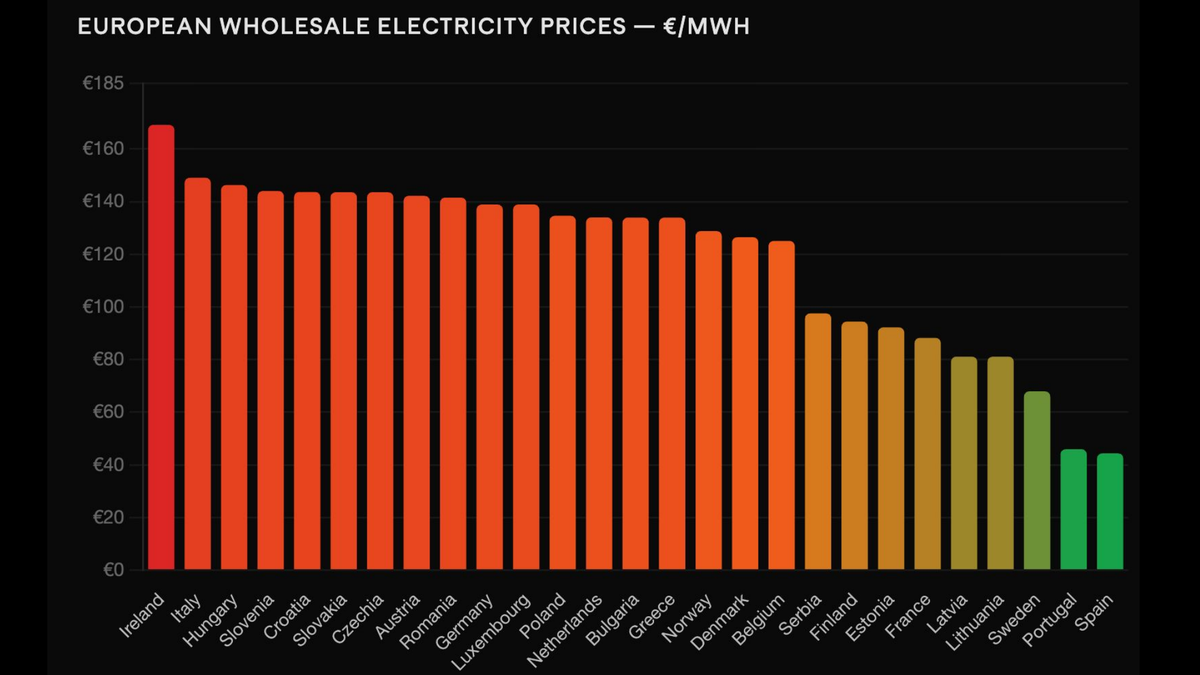
Last week, the Irish Times reported that Ireland’s wholesale electricity price is €169 per megawatt-hour, the most expensive in Europe. Spain’s is €44, a quarter of ours. Spain invested in wind, solar, and nuclear and achieved independence from gas. Ireland is heavily gas-dependent.
AI inference is energy-intensive. It goes where renewable, cheap energy is. The prize is to attract an outsized share of AI compute into your economy, to become a net AI exporter, the same way some countries are net energy exporters.
We have the wind and global data connectivity. We already host a massively outsized share of cloud computing, and have a coveted supply chain that can build and operate data centres at scale. Right now that expertise is building data centres for other countries. We need to fix that, through serious investment in the grid, in storage, and in renewables. And we need a serious conversation about small modular nuclear reactors.
Applied AI.
The IDA story is one of the most successful economic projects any small country has executed. We attracted the world’s companies, real leadership, real IP (pharma, fintech, medtech, financial services, insurance), all operating in our cities and communities, all connected. The density is unusual. You can reach a decision-maker in almost any global company operating in Ireland.
That density is exactly what you need to apply AI at enterprise scale. Not to win at foundational models; that’s a trillion-dollar arms race between superpowers. But applying AI to transform how real businesses in real industries actually operate, that is something Ireland is uniquely positioned to do.
Jentic is proof of this. A first conversation with a contact in Dublin, Galway, or Cork leads straight to a group call with senior stakeholders across America and Europe. Global deals, originated from Ireland, because global VPs live here now, and are confident that Irish people deliver. We already have a long legacy of building successful B2B software firms. This is the B2B story for the next decade.
The Revolution Is Theirs
I want to close with a recollection from exactly thirty years ago.
In 1996, I rang the doorbell of Ireland’s first ISP on Merrion Square to buy an internet connection. I filled out a paper form, paid cash, got a bus home, dialled up, and encountered the web for the first time. The next year I was building websites door-to-door in industrial parks across Dublin 12, and have been building internet companies ever since.
The students I spoke to on Monday should not wait for the coding jobs to come back. But there’s a new revolution happening and it belongs to them. A new field around how to create, govern, and scale agentic organisations to unlock untold productivity gains and generate wealth in our companies and society. Engineering, management science, systems design, security, and ethics, all at once. Nobody has fully worked it out. The playbook does not exist yet.
This revolution belongs to them, and Ireland should be the epicentre.